


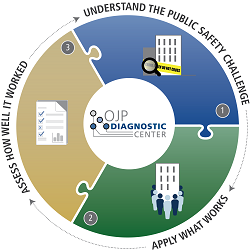
 A Diagnostic Center engagement begins when a local government executive or community leader contacts the Diagnostic Center to request assistance in implementing a data-driven approach to address a criminal justice, juvenile justice or victim services issue. Requests for assistance can encompass a community’s current or potential public safety challenges. Following the initial contact, the community requestor will be asked to fill out a Background Questionnaire. The Diagnostic Center will use the information provided in the questionnaire to determine the scope and nature of the request for assistance. After completing the intake forms, the Diagnostic Center will begin its three-phase technical assistance process.
 Understand the Crime Problem
Through a series of interviews with key stakeholders and a review of local data, the Diagnostic Center works with communities to synthesize information and gain a better understanding of the primary issue of concern. In close coordination with local criminal justice agencies, community leaders and subject matter experts from across and beyond the DOJ, the Diagnostic Center develops a Diagnostic Analysis that describes key criminogenic and socioeconomic factors contributing to the issue your community is facing. The Diagnostic Center maps these identified factors to recommended evidence-based models and data-driven strategies that have been shown to positively address similar issues in other communities. These findings and recommendations are then presented to community representatives in a comprehensive Diagnostic Analysis. The recommendations presented in the Diagnostic Analysis may include technical assistance, training or peer-to-peer mentoring approaches, among other proven strategies. To see a sample Diagnostic Analysis, click here.
 Apply What Works
Following the presentation of the Diagnostic Analysis, the Diagnostic Center shifts to the implementation of approved strategic recommendations outlined in the document. The Diagnostic Center works with communities to solidify the recommendations proposed in the Diagnostic Analysis and develop a strategy for how to implement prioritized recommendations. Throughout the Implementation Phase, the Diagnostic Center collaborates with the community to ensure that the proposed recommendations are translated into action and practice. For examples of effective evidence-based programs, visit CrimeSolutions.gov.
 Assess How Well It Worked
Diagnostic Center engagements conclude with the development of a customized Assessment Report for your community to help measure the effectiveness of the programs and practices implemented during the engagement. Additionally, the Diagnostic Center utilizes periodic reporting and implementation monitoring to identify opportunities to refine implementation strategies to better achieve a community’s desired outcomes. This final phase of support ensures that the community is able to collect and analyze data in order to certify that the new strategies adopted are achieving their intended outcomes. The Diagnostic Center will support the analysis of the impact of the implemented data-driven programming and share success stories and lessons learned with other state, local and tribal communities. To share a success story or lesson learned from your experience in implementing an evidence-based program or practice in criminal justice, click here.
 FAQs
FAQs Request Assistance
 Email Us
 Submit Your Success Story